



 Telephone : 400-123-4567
Blogpost Keywords: lost wax copper candle holder, lost wax copper candlestick, hand cast copper candle holder
A lost wax copper candle holder belongs to a more refined segment of decorative metal accessories, where craftsmanship and material quality directly shape perceived value. Unlike lightweight, mass-produced candlesticks, pieces created through lost wax casting feature solid structure, nuanced surface detail, and a noticeable sense of weight.
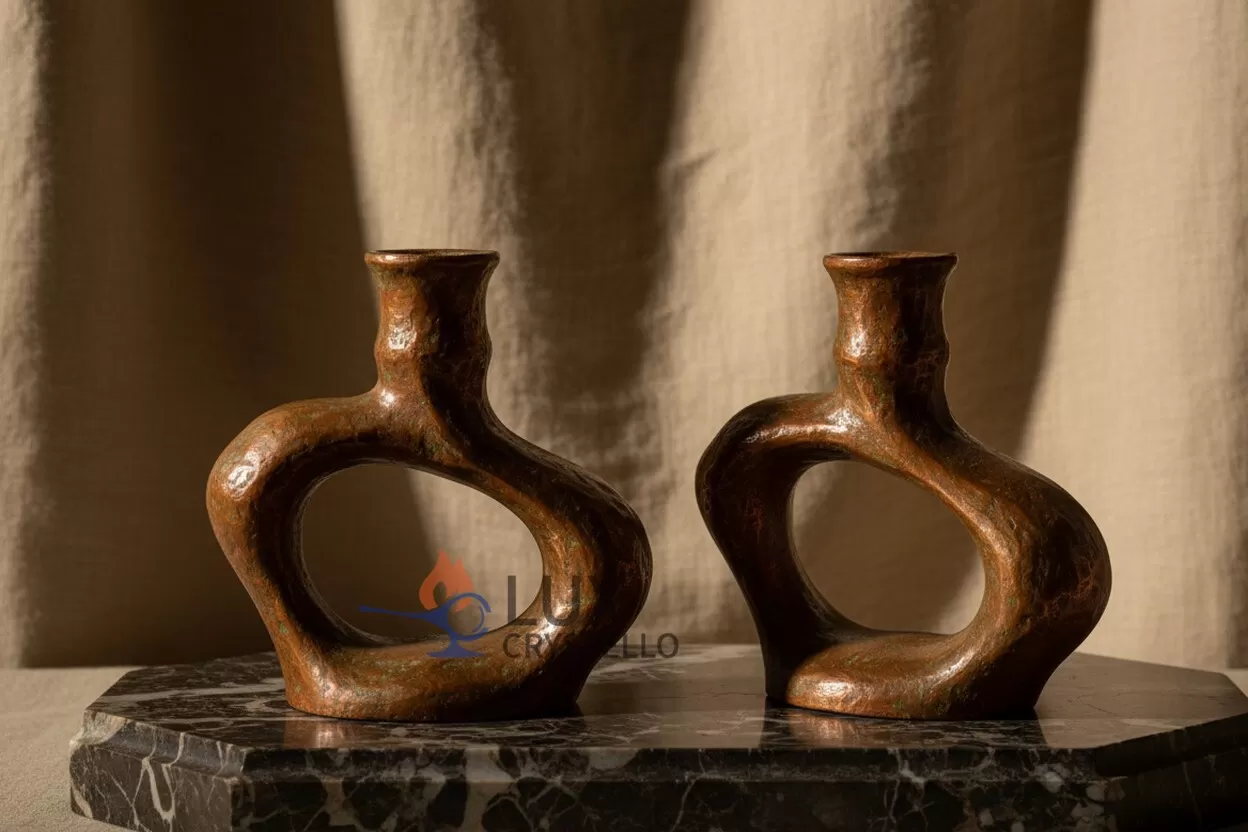
For professional buyers, this distinction has clear commercial relevance. Lost wax copper candle holders are commonly positioned in premium retail assortments, hospitality styling, and curated home décor collections—markets where durability, authenticity, and repeatable quality influence purchasing decisions and long-term reorder potential.
What a Lost Wax Copper Candle Holder Is and How It Is Made
A lost wax copper candle holder is produced using the investment casting process, a technique long associated with fine metalwork and sculpture. Each piece begins as a wax model that defines its final proportions and decorative detail. This wax form is coated with a ceramic shell, then heated so the wax melts away, leaving a precise cavity.
Molten copper or copper alloy is poured into the mold to create a solid metal form. Once cooled, the ceramic shell is removed, and the candle holder is refined through finishing processes such as polishing, brushing, or patination.
Compared with spun or stamped alternatives, a lost wax copper candlestick is often cast as a single integrated piece. This minimizes seams and weak joints, resulting in improved balance, stability, and long-term structural integrity—qualities valued in both retail and hospitality environments.
Why Lost Wax Casting Elevates Copper Candle Holder Quality
One of the most visible benefits of lost wax casting is material presence. A hand cast copper candle holder typically features thicker walls and greater mass than fabricated designs, enhancing both stability and tactile quality. In practical use, this added weight reduces tipping and movement, particularly on dining tables or hospitality surfaces.
Detail reproduction is another key advantage. Lost wax casting captures fine curves, sculptural contours, and subtle textures that are difficult to achieve through mechanical forming. This makes a lost wax copper candlestick especially suitable for collections inspired by classical, vintage, or artisanal aesthetics.

Surface finishing also benefits from casting. Antiqued, brushed, or patinated finishes tend to develop more evenly on solid cast copper, helping buyers maintain visual consistency across multiple production batches—an important consideration for B2B programs with repeat orders. For SKUs that rely on patina depth and repeatability, a hand cast copper candle holder format often delivers more predictable results than thin-sheet alternatives.
Commercial Applications Across Retail and Hospitality Settings
In commercial interiors, a lost wax copper candle holder is often used as a decorative accent rather than a purely functional item. Restaurants, hotels, and lounges place them on dining tables, reception counters, or sideboards to introduce warmth and atmosphere without relying solely on fixed lighting.
Retailers typically position lost wax copper candle holders within premium or handcrafted décor segments, where storytelling around material and process supports higher perceived value. They are also effective in seasonal displays and curated gift assortments, particularly when presented as coordinated sets. In these assortments, a lost wax copper candlestick can function as a hero piece, anchoring the “crafted metal” story and supporting premium pricing.
For event styling and hospitality use, the durability of cast copper offers practical advantages. Compared with thinner metal alternatives, cast pieces are more resistant to deformation and better suited for repeated handling, repositioning, and storage—another reason a hand cast copper candle holder is favored by high-touch commercial users.
Sourcing Considerations for Professional Buyers and Distributors
When sourcing a lost wax copper candle holder, buyers should evaluate consistency as carefully as craftsmanship. Casting quality, finish uniformity, and acceptable weight tolerance all affect how reliably a product performs across repeat orders.
Lead times are typically longer than for mass-produced candlesticks, as mold preparation and casting cycles require additional time. Clear communication around production schedules, quality inspection points, and packaging standards helps align expectations for bulk purchasing.
For distributors, working with manufacturers experienced in handcrafted décor and export logistics supports long-term stability. This experience is especially valuable when scaling a lost wax copper candlestick line that depends on repeatable finishes and dependable supply rather than rapid design turnover.
A Practical Perspective on Selecting Lost Wax Copper Candle Holders
A lost wax copper candle holder is more than a decorative object—it is a material-driven product with direct implications for quality perception, pricing structure, and durability. For B2B buyers, understanding the casting process helps explain differences in weight, finish behavior, and long-term performance when compared with lighter alternatives.
By aligning design intent, usage context, and supplier capability, professional buyers can confidently integrate a hand cast copper candle holder into collections that emphasize craftsmanship, authenticity, and lasting value.
Supporting Thoughtfully Curated Décor Collections
When developing a range that includes a lost wax copper candlestick, many buyers seek partners who understand both traditional casting techniques and modern B2B requirements. A reliable manufacturing relationship can simplify customization, quality control, and repeat ordering—supporting sustainable growth within premium décor programs.
400-123-4567
138-0000-0000