



 Telephone : 400-123-4567
Lost-wax bronze casting process remains one of the most respected methods in traditional and contemporary metalwork, prized for its ability to transform intricate designs into durable and expressive objects. From sculptural artworks to refined decorative elements, this process continues to influence how form, texture, and material character are achieved in high quality bronze pieces.
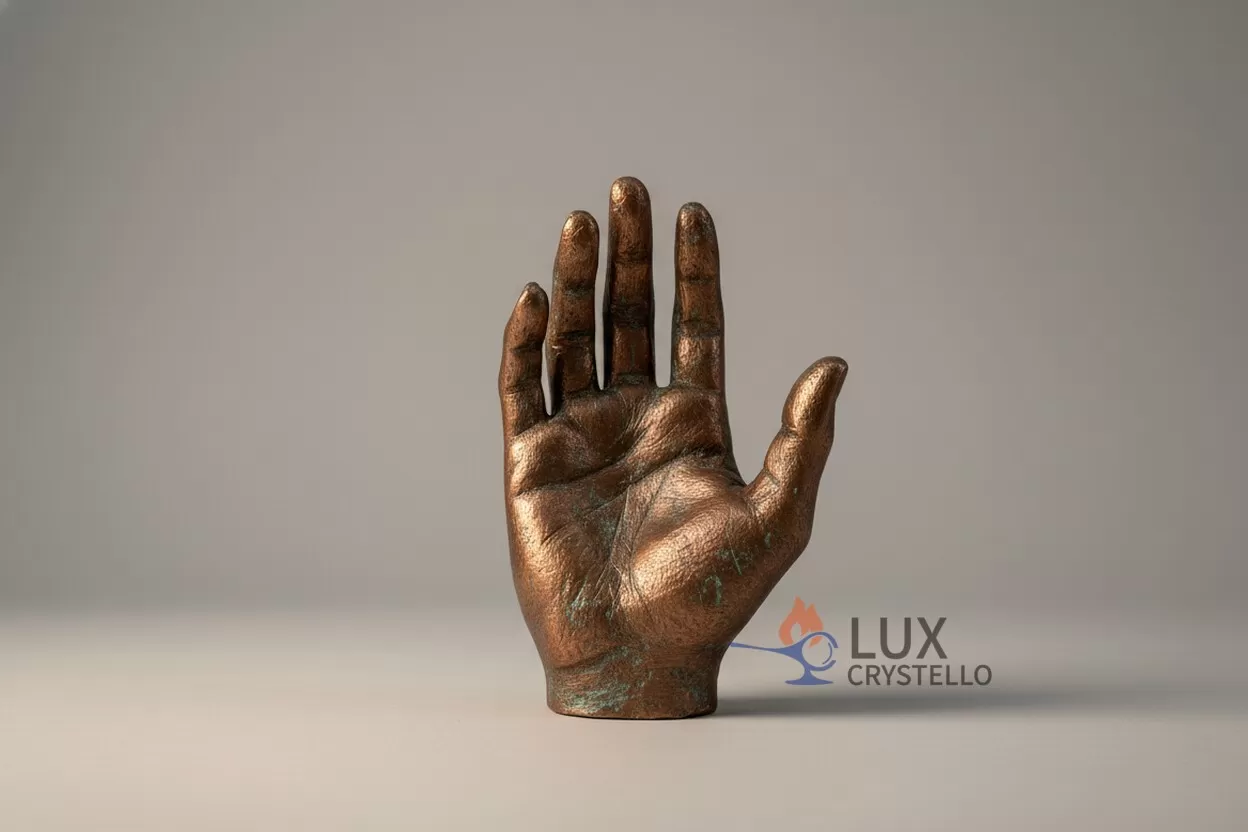
Lost-wax bronze casting process begins with a meticulously formed wax model that represents the final object in full detail. This wax stage is not a preliminary sketch but a complete three dimensional prototype, capturing every contour, transition, and surface nuance. The wax model is encased in a refractory mold, then heated so the wax melts away, leaving a precise cavity for molten bronze.
Because the metal flows directly into a space once occupied by wax, the final object preserves the integrity of the original form. This direct translation is what allows artisans to create complex geometries and subtle detailing that cannot be achieved through mechanical fabrication.
The role of wax is central to the success of the entire process. Wax offers a unique balance of softness and stability, allowing artisans to carve, smooth, and refine details by hand. Thickness, edge sharpness, and rhythm of form are all established at this stage, making wax modeling a critical creative and technical decision.
A common misunderstanding is that surface refinement happens primarily after casting. In reality, the role of wax determines much of the final appearance. Tool marks, gentle undulations, and intentional irregularities formed in wax often remain visible in the finished bronze, lending authenticity and depth rather than flaw.
Although bronze is an alloy, its visual qualities are closely associated with copper metal surface behavior. Lost-wax bronze casting process allows the copper rich surface to develop subtle tonal variation and organic texture. Instead of a uniformly smooth finish, the copper metal surface often reveals layered depth that responds beautifully to light.
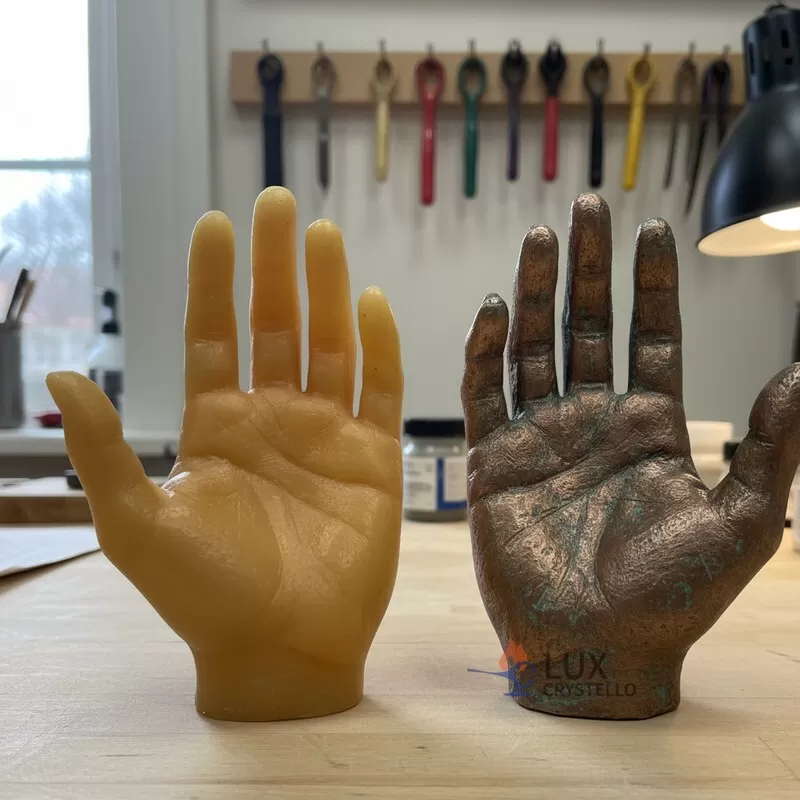
Post casting treatments such as patination or light polishing enhance these qualities but do not replace them. When the wax stage is thoughtfully executed, the copper metal surface naturally expresses warmth, material weight, and visual richness.
Understanding the lost-wax bronze casting process helps designers make informed decisions early in a project. Thin extensions, sharp undercuts, and complex intersections are achievable, but they must be carefully planned during wax modeling to ensure proper metal flow and structural stability.
Scale also plays an important role. Larger pieces require thicker wax sections to prevent deformation during mold making, which influences the mass and presence of the final object. These adjustments are directly tied to the role of wax and should be considered part of the design language rather than technical constraints.
Objects produced through lost-wax bronze casting process tend to age gracefully. Over time, the copper metal surface develops natural patina that enhances sculptural depth and highlights form transitions. Because these transitions were defined in wax, aging typically reinforces rather than obscures the original design intent.
This durability and visual evolution explain why museums, collectors, and architectural projects continue to favor this method for works meant to endure for decades.
Lost-wax bronze casting process represents a fusion of artistic intention and material understanding. By respecting the role of wax and its influence on copper metal surface expression, artisans create bronze works that balance precision, character, and longevity.
When planning projects that rely on lost-wax bronze casting process, early collaboration with experienced casters is essential. Thoughtful decisions at the wax stage, informed by material behavior, ensure that the final bronze object achieves both technical excellence and lasting visual depth.
Excellent lost-wax bronze casting process combines superior craftsmanship, attention to detail, and functional design to create an exceptional experience.
To enhance your the role of wax, focus on quality materials, proper maintenance, and complementary accessories that match your style.
Key considerations include material quality, design aesthetics, functional performance, and overall durability when evaluating copper metal surface.
If you are interested in French lamps or bronze art or have related needs,
please feel free to contact us. click here
400-123-4567
138-0000-0000