



 Telephone : 400-123-4567
Blogpost keywords: lost wax brass ornament production, lost wax brass casting, brass ornament manufacturing
Lost wax brass ornament production is widely used for decorative pieces that require fine detail, classical proportions, and a handcrafted feel. For professional buyers, however, ornaments are not just about appearance. Consistency, material stability, and the ability to scale production are equally important, especially when ornaments are used across collections or repeated projects. Many buyers choose lost wax brass casting because it supports intricate detailing without relying on multi-part fabrication.
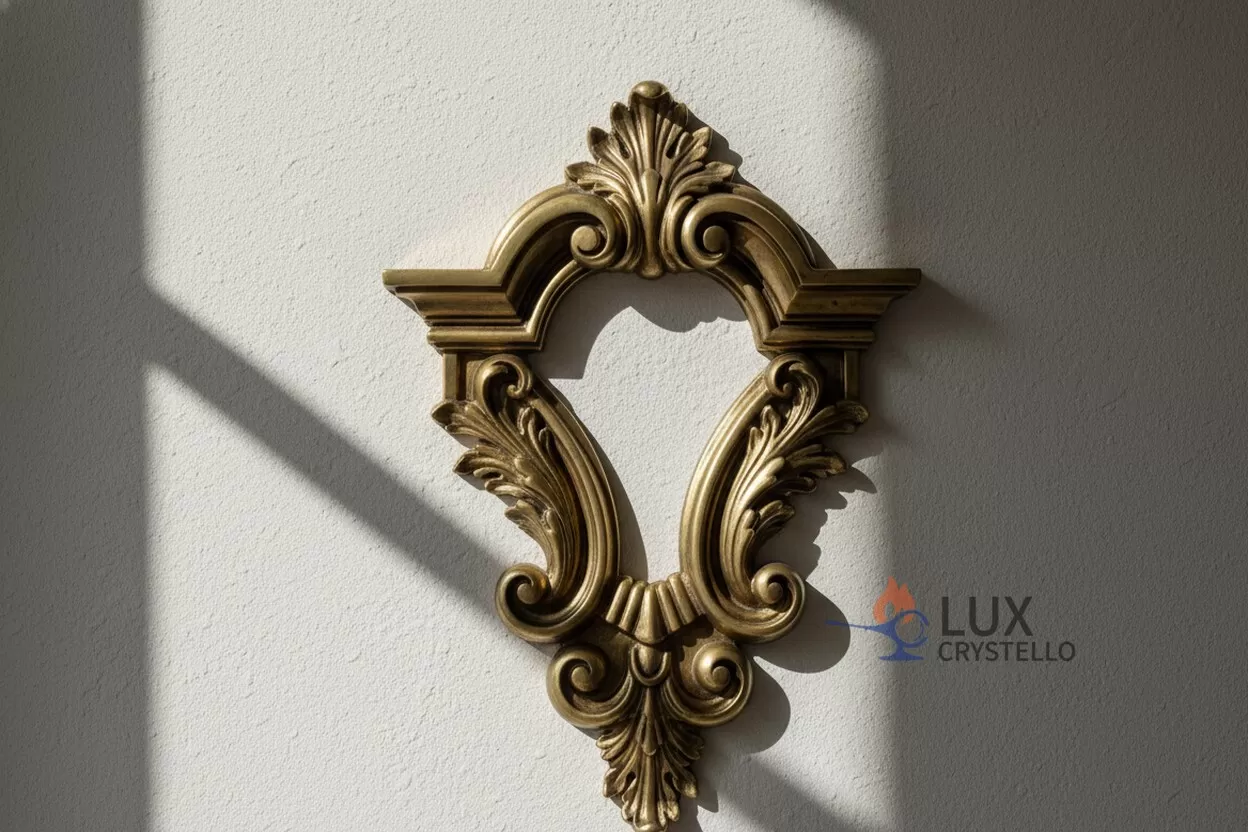
Brass ornaments often appear in interior decor, lighting accessories, furniture accents, or architectural details. When produced using lost wax casting, these items can achieve refined textures and complex shapes that are difficult to replicate with mass-production methods. Understanding how this process works helps buyers assess suppliers more realistically and avoid quality surprises. In competitive sourcing, brass ornament manufacturing decisions often come down to repeatability and finishing discipline rather than design alone.
Lost Wax Brass Ornament Production: Process Overview and Craft Background
Lost wax brass ornament production begins with a wax model that defines the exact shape of the ornament. This can include floral motifs, classical patterns, figurative elements, or geometric details. The wax model is coated with multiple layers of refractory material to form a mold. Once hardened, the wax is melted out, and molten brass is poured into the cavity. At this stage, lost wax brass casting is valued for how faithfully it transfers fine surface geometry from wax to metal.
This technique has been used for centuries in decorative metalwork because it captures fine detail with high accuracy. For brass ornaments, this means crisp edges, smooth curves, and controlled symmetry, qualities that are especially valued in classic and French-style decor.
After casting, the ornament is trimmed, cleaned, and polished. Surface finishing follows, depending on the intended look. Buyers should note that while the casting method defines the shape, finishing determines the final visual quality. Differences in polishing standards and inspection routines can lead to noticeable variation between suppliers, which is why brass ornament manufacturing audits often include surface grading criteria and sample sign-off steps.
Why Lost Wax Casting Is Ideal for Decorative Brass Ornaments
One of the main reasons buyers choose lost wax brass casting is its ability to produce complex forms in a single piece. Decorative brass ornaments often include undercuts, layered reliefs, or organic shapes that are impractical to fabricate through stamping or machining. Another advantage is material density. Lost wax casting typically produces solid brass components with a satisfying weight and durability. This is important for ornaments used as visible decorative elements, where perceived quality matters as much as actual performance.
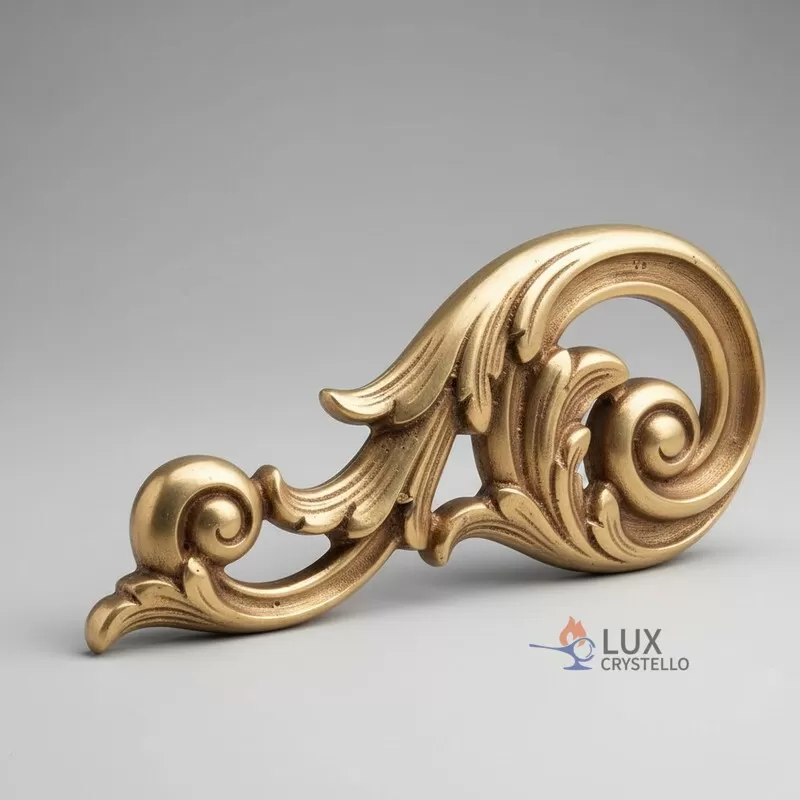
From a B2B perspective, the process also supports design flexibility. Adjustments to scale, thickness, or decorative details can often be handled by modifying the wax model, making it suitable for private-label collections or regional design adaptations without completely changing production methods. For certain high-relief patterns, lost wax brass casting can also reduce assembly points that would otherwise create visible seams.
Quality, Detail, and Material Considerations in Brass Ornament Manufacturing
In brass ornament manufacturing, detail consistency is a key quality indicator. Buyers should examine whether fine lines and relief patterns remain clear across multiple samples, not just a single prototype. Variations can occur if mold preparation or metal flow is not well controlled.
Material selection also plays an important role. Different brass alloys affect color tone, hardness, and surface finish behavior. While these differences may seem subtle, they can influence how well antique, brushed, or aged finishes develop over time.
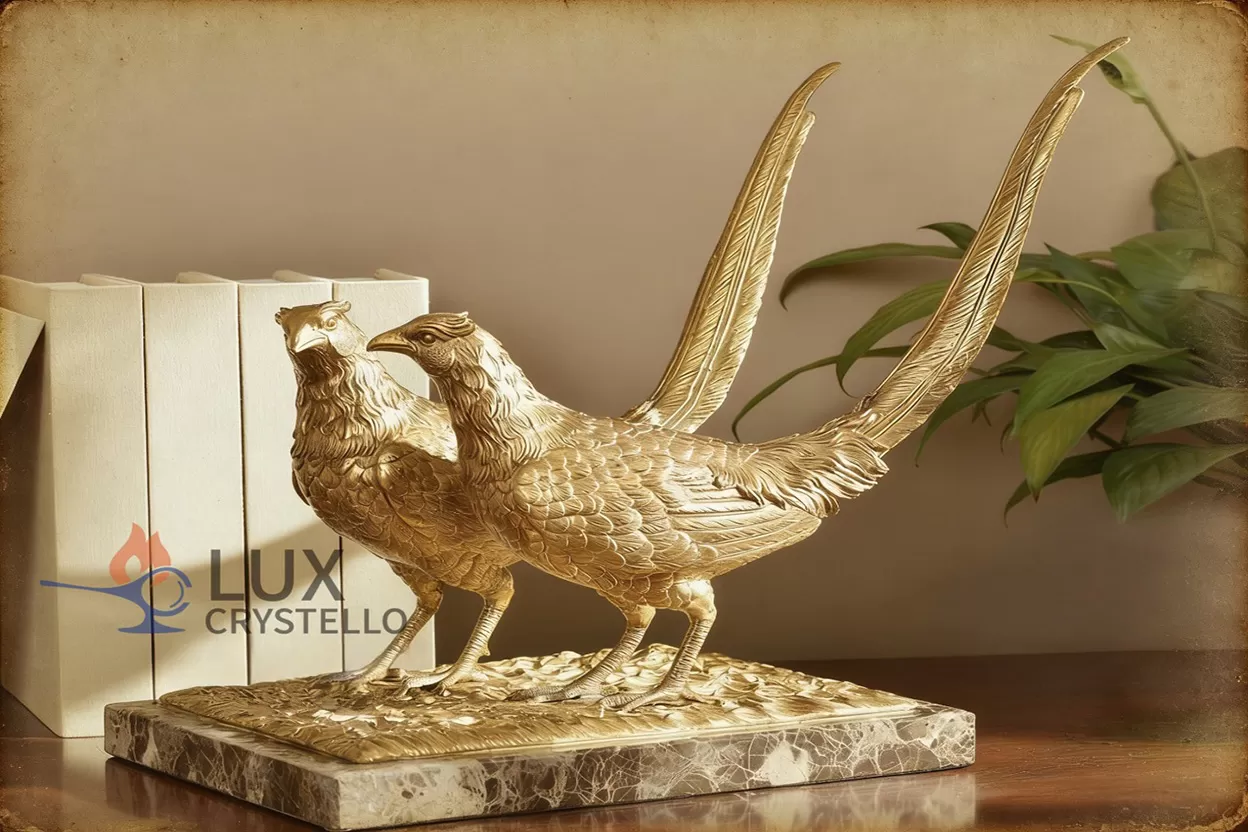
Surface treatment is another critical factor. Decorative brass ornaments often rely on uniform texture to achieve a premium look. Poor polishing can exaggerate casting marks, especially under directional lighting. Reviewing both unfinished and finished samples helps buyers understand the true craftsmanship level behind the product. A practical best practice in brass ornament manufacturing is to confirm acceptable surface tolerance levels in writing before production starts.
Common Sourcing Challenges and Misunderstandings in Brass Ornaments
A common misunderstanding is assuming that "handcrafted" automatically means inconsistent. While lost wax casting involves manual steps, experienced manufacturers apply standardized controls to ensure repeatability. Buyers should ask how quality is monitored across batches. In brass ornament manufacturing, this often includes documented checkpoints for wax integrity, shell thickness, and post-cast cleanup.
Another challenge is underestimating lead time. Lost wax brass ornament production includes wax modeling, mold preparation, casting, finishing, and sometimes secondary treatments. Compressing timelines often increases defect risk rather than speeding delivery.
Packaging is also frequently overlooked. Brass ornaments, especially those with fine protrusions, can be damaged during transport if not properly protected. Buyers should confirm packaging methods early, particularly for export orders with long transit times.
A Practical Note for Buyers Developing Decorative Collections
Lost wax brass ornament production offers a reliable balance between artistic detail and manufacturing scalability when managed correctly. Buyers who focus on casting quality, finishing standards, and realistic timelines are more likely to achieve consistent results across repeat orders. When supplier capabilities are a deciding factor, requesting a pilot run that reflects real production conditions for lost wax brass casting can reduce risk before scaling.
For distributors and project buyers sourcing decorative brass decor, understanding how traditional metal casting translates into real-world production performance makes supplier selection more transparent and predictable.
400-123-4567
138-0000-0000